


The Centra Family

Services
For Pros

Categories
Trending
Comfort Energy Savings In The News
Discover Centra’s Supreme Collection Windows: The Best Option for Comfort and Style
Budgeting Energy Savings
Are Energy-Efficient Windows Worth the Investment?
Comfort Energy Savings
Which Windows Are Most Energy Efficient? An Expert Guide to Save on Energy & Costs
Recommended
Comfort Energy Savings
5 Tips to Make a Home Energy EfficientComfort Energy Savings
Which Windows Are Most Energy Efficient? An Expert Guide to Save on Energy & Costs
What Is a Spacer Bar in a Window? Why It Affects More Than You’d Think
Ask most homeowners what’s inside their windows and you’ll hear about double or triple panes, argon gas, maybe glass coatings. The spacer bar – the component that actually holds those panes apart – almost never comes up. It’s small, it’s hidden at the edge of the glass, and some window salespeople may not even mention it.
That’s a gap worth closing. The spacer bar plays a direct role in how much heat your windows lose, how likely condensation is to form at the edges, and how long the sealed unit holds together before it needs replacing. For a component nobody talks about, it has a lot riding on it.
What a Spacer Bar Actually Does
A double or triple-pane window isn’t just glass and gas. The panes need to be held apart at a precise, consistent distance around the entire perimeter – and that gap needs to stay sealed against moisture and air infiltration for the life of the window. That’s the spacer bar’s job.
It runs around the inside edge of the window unit, bonded to the glass on either side with sealants. Inside the spacer there can be a desiccant material – typically silica beads or a similar moisture-absorbing compound – that captures any residual moisture inside the sealed cavity and keeps the space between the panes dry. Without it, even trace amounts of moisture trapped during manufacturing would eventually condense on the interior glass surfaces and cause fogging.
The Problem with Aluminum Spacers
For most of window manufacturing history, spacer bars were made from aluminum. It’s rigid, durable, and easy to work with. It’s also highly conductive – which turns out to be a significant problem in a component sitting right at the edge of every pane of glass in your home. Some manufacturers also used regular, conductive steel spacer bars.
Aluminum and steel spacer bars allow heat to pass quickly through the window, leaving the inside edge of the window colder than the rest of it. This cold edge is where problems concentrate. When warm interior air meets a cold surface, moisture condenses. In a window with an aluminum spacer, that condensation tends to form first at the edges – the thin band of fogging you sometimes see creeping in from the corners before the rest of the glass is affected.
Beyond the visible condensation, aluminum and steel spacers can lead to increased stress on the sealants, raising the likelihood of seal failure over time. The repeated thermal expansion and contraction that happens every time the temperature changes is harder on sealants that are already dealing with a cold, conductive edge.
What Warm-Edge Spacers Do Differently
The response to aluminum and steel’s shortcomings was the warm-edge spacer – a category that includes spacers made from less conductive materials, such as stainless steel.
Warm-edge spacer bars insulate the edges of a sealed unit, keeping the panes of glass apart while acting as a barrier against heat loss – reducing the amount of heat escaping through the window edge and lowering the risk of condensation forming at the perimeter.
The performance difference is measurable. Research published by the Lawrence Berkeley National Laboratory shows that replacing a traditional aluminum spacer with an insulating warm-edge spacer reduces the total window U-value considerably – and that’s without changing the glass, the gas fill, or anything else. The spacer alone moves the number.
For a Canadian home trying to hold heat through a long winter, that edge performance compounds across every window in the house.
The Three Things a Spacer Affects
It helps to think about a window spacer’s influence in three distinct areas, because homeowners tend to focus on only one – if they think about it at all.
Energy performance
The spacer sits at the thermal boundary between inside and outside. A conductive spacer creates what engineers call a thermal bridge – a direct path for heat to travel through, bypassing the insulating gas fill entirely. Warm-edge materials interrupt that path. The result is a better U-Value for the whole window unit, not just in the middle of the glass.
Condensation at the edges
Edge condensation – the fogging or frost that forms around the perimeter of a window on cold days – is largely a spacer story. A cold edge pulls moisture out of interior air. A warmer edge, produced by a low-conductivity spacer, reduces that effect. This matters both for comfort and for long-term seal integrity, since repeated moisture exposure accelerates sealant degradation.
Seal longevity
The spacer and its sealants are what hold the insulated unit together for its entire service life. Among the leading causes of seal failure in installed insulated glass units is seal breakdown from excessive water exposure – moisture enters the cavity space as the window thermally expands and contracts, eventually overwhelming the desiccant and leading to fogging between the panes. A warm-edge spacer reduces the thermal stress that drives this cycle, which translates to a longer-lasting seal.
What Fogging Between Panes Is Actually Telling You
When a window fogs between the panes, most homeowners assume it’s a cleaning problem. It isn’t – condensation appearing between panes signals that the insulated glass unit is no longer working, most often because the seal is no longer airtight.
At that point, the desiccant inside the spacer has absorbed all the moisture it can hold, and the rest is condensing on the glass interior surfaces. The argon or other gas fill has typically escaped as well, so the window’s thermal performance is now closer to a single pane than what was originally installed.
It’s unlikely that a fogged insulated glass unit is fixable – the more effective solution is to replace the whole glass unit. Depending on the window design, this sometimes means replacing just the sealed unit rather than the entire frame, which can be more cost-effective. Either way, the spacer and sealant quality in the replacement unit will determine how long the new unit lasts.
Why Homeowners Choose Centra Install Pros
The spacer bar is one of those components where the quality difference between a well-made window and a budget option isn’t visible from the outside – until years later, when one unit is still performing and the other is fogging at the edges.
Manufactured in-province for Canadian conditions
Centra windows are built specifically for the demands of Canadian weather, where the temperature differential between inside and outside during winter puts real stress on sealed units. Spacer selection and seal design are specified for long-term performance in those conditions.
In-house installation by Centra Employee Owners
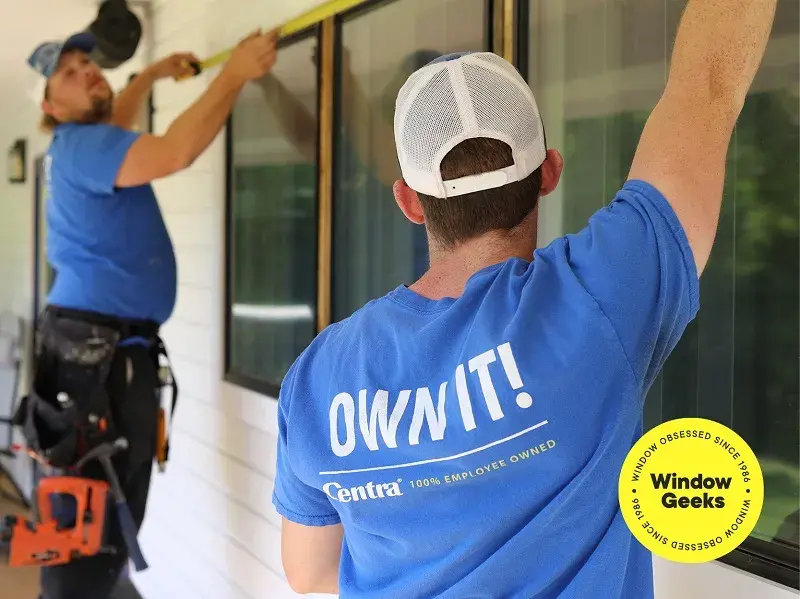
Every Centra installation is completed by Employee Owners, not subcontractors, which means consistent workmanship at the detail level where seal longevity is actually determined.
30-year transferable warranty, labour included
If a sealed unit fails, Centra’s warranty covers the window, the installation, and if there’s ever a problem, the work to fix it. No surprise costs, no arguments about what’s covered.
Well Over 40 years of experience
Centra has been manufacturing and installing windows in Western Canada long enough to know which materials hold up and which don’t. That experience shows in product decisions – including what goes inside the edge of the sealed unit.
FAQ: Window Spacer Bars
What is a spacer bar in a window?
A spacer bar is the component that runs around the inside perimeter of a double or triple-pane window, holding the panes apart at a fixed distance and forming the sealed edge of the insulated glass unit. It contains desiccant material to keep the interior cavity dry and is bonded to the glass with sealants that hold the unit together.
What is a warm-edge spacer and why does it matter?
A warm-edge spacer is made from a low-conductivity material – such as stainless steel – rather than aluminum. It reduces the thermal bridge at the edge of the window unit, which improves the overall U-Value, reduces edge condensation, and lowers stress on the sealants over time.
Why is there condensation at the edge of my windows?
Edge condensation is usually caused by a cold spacer bar conducting heat away from the interior glass surface. When that edge gets cold enough, moisture from interior air condenses there. It can also indicate early seal degradation. A warm-edge spacer reduces this effect by keeping the edge warmer.
Why is my window fogged between the panes?
Fogging between panes means the sealed unit has failed – the perimeter seal has been compromised, moisture has entered the cavity, and the desiccant inside the spacer is no longer able to absorb it. At that point, the unit needs to be replaced rather than repaired.
How long should a window’s sealed unit last?
A well-made sealed unit with quality sealants and a warm-edge spacer, properly installed and protected from sustained water exposure, should last 20 years or more. Centra Install Pros’ warranty actually covers the sealed unit for a full 30 years. Leading causes of premature failure are water pooling against the seals, poor installation, and thermal stress from highly conductive spacer materials.
The Part Nobody Talks About
The spacer bar won’t appear in most window advertisements. It’s not a feature that photographs well or sounds terribly impressive in a sales pitch – but it’s integral to your window and how long the sealed unit holds together.
Knowing it exists, knowing what it does, and knowing to ask about it puts you in a better position when comparing windows and quotes.
Book your free consultation with Centra Install Pros today.
Centra: Western Canada’s Top Choice for Windows & Doors
Have an upcoming window and door project? Reach out to the experts for a free consultation! If you have any questions regarding this topic or anything else to do with windows, contact a local Centra Employee Owner at 1-888-534-3333 or drop us an email at info@centra.ca. Follow us on Facebook and Instagram to stay up to date, and test your window knowledge on LinkedIn.